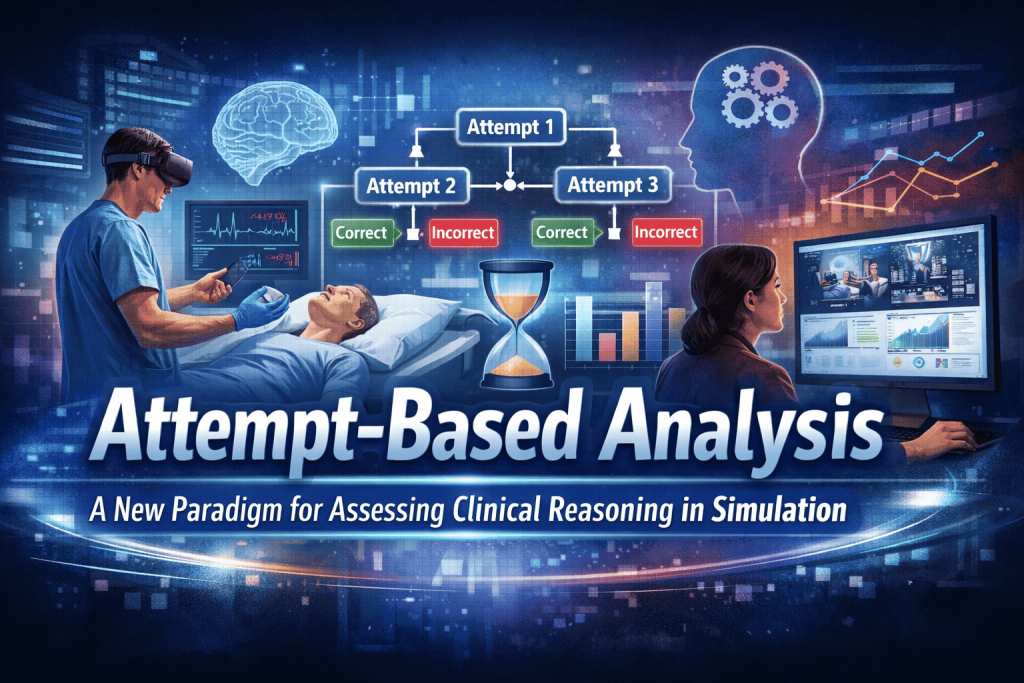
Attempt-Based Analysis: A New Paradigm for Assessing Clinical Reasoning in Simulation

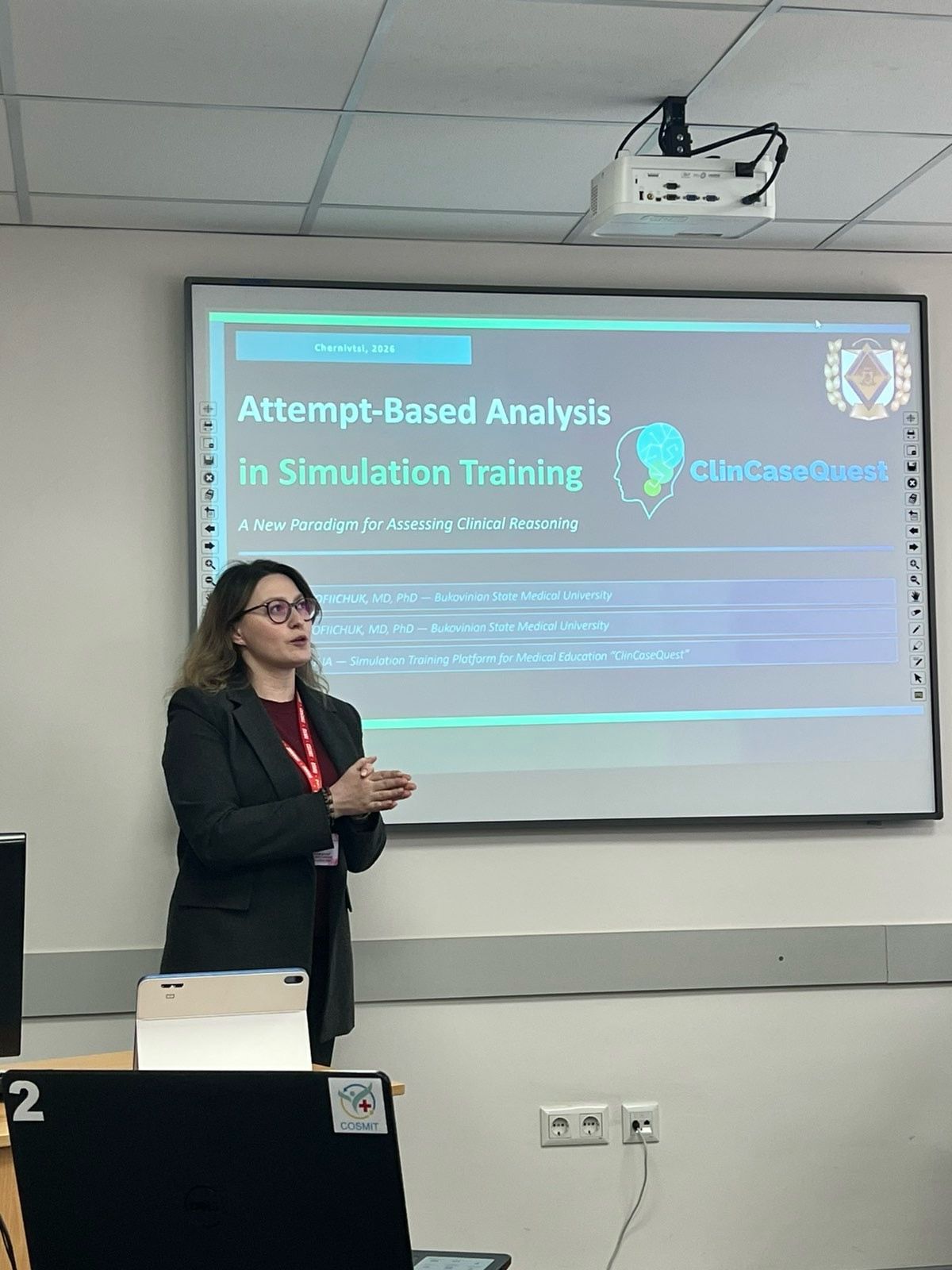
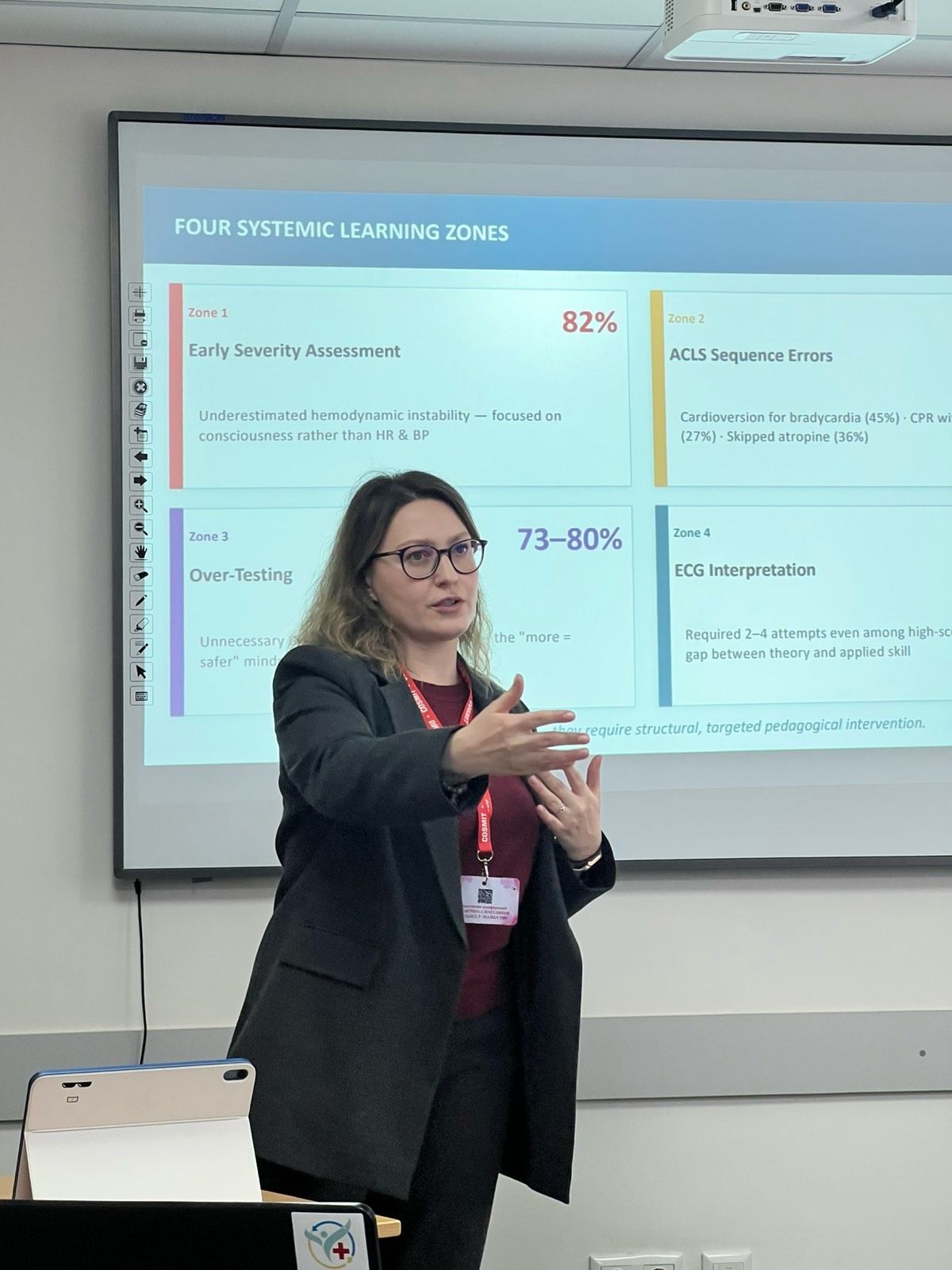
ClinCaseQuest is proud to highlight the presentation of Tetiana Antofiichuk, MD, PhD, at the international scientific-practical conference “Medical Simulation: A Look into the Future”, held at Bukovinian State Medical University.
Dr. Antofiichuk is an educator at one of the validation centers of the ClinCaseQuest simulation training platform, where she teaches clinical reasoning – a core competency that our simulation scenarios are designed to develop.
Her presentation introduced an analytical approach developed within ClinCaseQuest for evaluating clinical reasoning in simulation training: Attempt-Based Analysis
Traditional simulation assessment typically measures only the final correctness of a clinical decision. However, this approach may conceal critical differences in the reasoning process that leads to that decision.
The study conducted using ClinCaseQuest simulation scenarios demonstrated that:
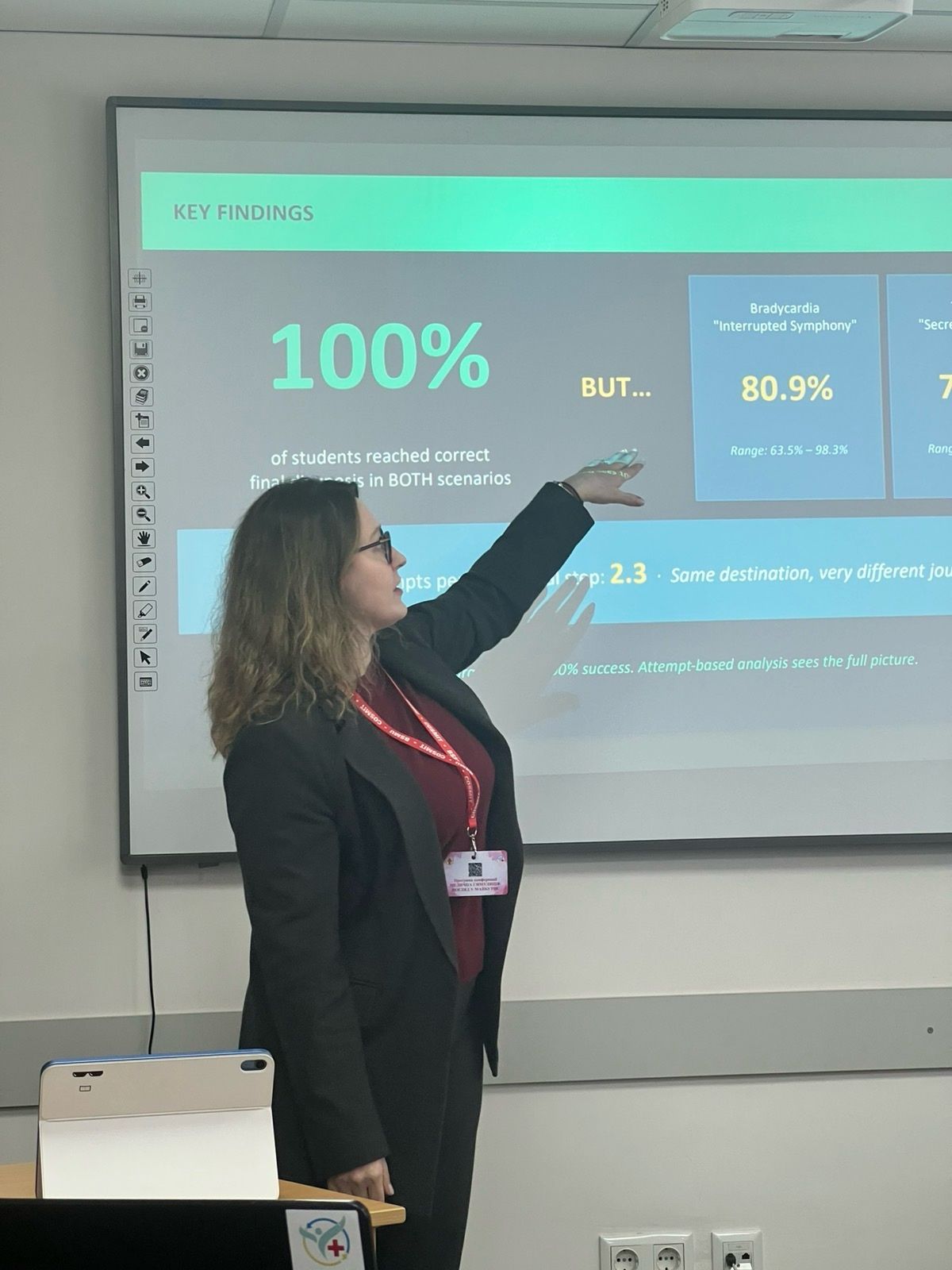
- 100% of students reached the correct final diagnosis in both scenarios
- however, their clinical reasoning pathways differed significantly
- on average, students required 2.3 attempts per key clinical decision step to reach the correct outcome
By analyzing attempts, types of errors, self-correction patterns, and decision-making time, this method reveals how students think, rather than only what decision they ultimately make.
The research also identified five distinct clinical reasoning types, ranging from structured expert reasoning to trial-and-error decision making.
Even more importantly, the analysis uncovered four systemic learning zones where targeted educational interventions are needed:
- Early severity assessment of hemodynamic instability
- Errors in ACLS decision sequences
- Over-testing driven by the “more tests = safer” mindset
- Gaps in ECG interpretation despite theoretical knowledge
These findings demonstrate an important insight for medical education:
The correct answer is not the finish line – it is where meaningful analysis begins.
Attempt-based analysis complements traditional evaluation by making the clinical reasoning process visible, enabling educators to design more precise and effective teaching interventions.
ClinCaseQuest is grateful to Bukovinian State Medical University for serving as a validation center and supporting this research initiative.
We also thank the medical students of the Bukovinian State Medical University who participated in the study and contributed to advancing new approaches to assessing clinical competence in simulation training.
Research like this represents an important step toward data-informed medical education and more effective development of clinical reasoning skills.
Register on our website right now to have access to more learning materials!
Subscribe to our pages:
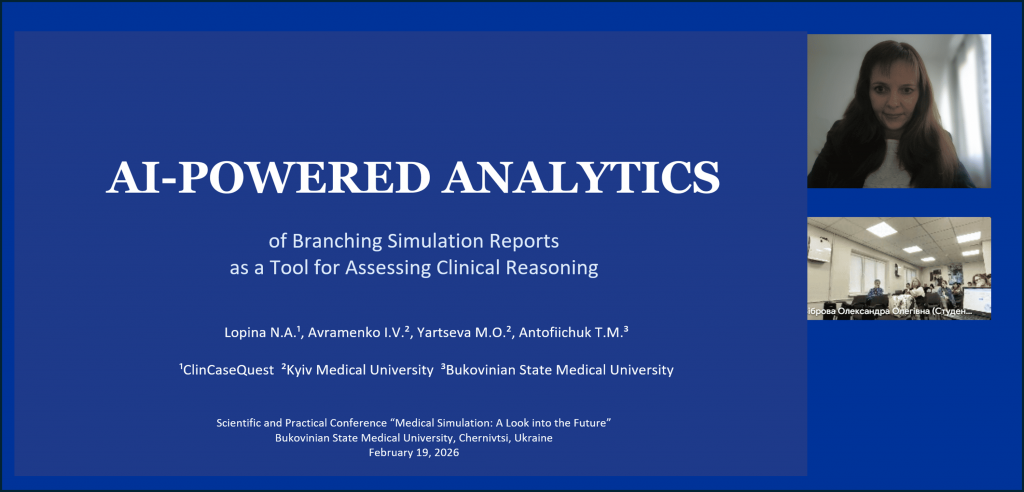
ClinCaseQuest presented the first experience of analyzing branching simulation logs based on artificial intelligence at the “Medical Simulation: A Look into the Future” Conference
ClinCaseQuest is pleased to share our participation in the scientific and practical conference “Medical Simulation:…

AI-Driven Patient Simulator – Quick Feedback
🗣️ We Value Your Feedback Thank you for your interest in the AI-Driven Patient Simulator!…
Get Early Access AI-Driven Patient Simulator
Try the AI-Driven Patient Simulator and explore the future of medical education 🧠 Try the…
Celebrating a Major Milestone: SESAM Recognizes ClinCaseQuest’s Defragmented Debriefing Model as an Advancement in Clinical Simulation 2024
At ClinCaseQuest, we are thrilled to announce an outstanding achievement in the field of medical…

ClinCaseQuest Featured in SchoolAndCollegeListings Directory
Exciting News Alert! We are thrilled to announce that ClinCaseQuest has been successfully added to…

We presented our experience at AMEE 2023
AMEE 2023 took place from 26-30 August 2023 at the Scottish Event Campus (SEC), Glasgow,…